Jos joku kaverisi pyytää sinut mukaan mielenosoitukseen, puetko päällesi rynnäkkövarusteet, nassen ja otat mukaan megafonin, jolla tarkoitus huudattaa eri mieltä olevat kuuroiksi? Herkkänahkaista, jos joku tuollaisesta provosoituu.Mielenosoittaminen on tietenkin vaarallista,

-
PikanavigaatioAjankohtaista io-tech.fi uutiset Uutisia lyhyesti Muu uutiskeskustelu io-tech.fi artikkelit io-techin Youtube-videot Palaute, tiedotukset ja arvonnat
Tietotekniikka Prosessorit, ylikellotus, emolevyt ja muistit Näytönohjaimet Tallennus Kotelot ja virtalähteet Jäähdytys Konepaketit Kannettavat tietokoneet Buildit, setupit, kotelomodifikaatiot & DIY Oheislaitteet ja muut PC-komponentit
Tekniikkakeskustelut Ongelmat Yleinen rautakeskustelu Älypuhelimet, tabletit, älykellot ja muu mobiili Viihde-elektroniikka, audio ja kamerat Elektroniikka, rakentelu ja muut DIY-projektit Internet, tietoliikenne ja tietoturva Käyttäjien omat tuotetestit
Softakeskustelut Pelit, PC-pelaaminen ja pelikonsolit Ohjelmointi, pelikehitys ja muu sovelluskehitys Yleinen ohjelmistokeskustelu Testiohjelmat ja -tulokset
Muut keskustelut Autot ja liikenne Urheilu TV- & nettisarjat, elokuvat ja musiikki Ruoka & juoma Koti ja asuminen Yleistä keskustelua Politiikka ja yhteiskunta Hyvät tarjoukset Tekniikkatarjoukset Pelitarjoukset Ruoka- ja taloustarviketarjoukset Muut tarjoukset
Kauppa-alue
Navigation
Install the app
How to install the app on iOS
Follow along with the video below to see how to install our site as a web app on your home screen.
Huomio: This feature may not be available in some browsers.
Lisää vaihtoehtoja
Tyylin valinta
-
TechBBS:n politiikka- ja yhteiskunta-alue (LUE ENSIN!)
Politiikka- ja yhteiskunta-alue on TechBBS-keskustelufoorumilla ala-osio, joka on tarkoitettu poliittisten ja yhteiskunnallisten aiheiden sekä niiden ilmiöiden ja haasteiden käsittelyyn.
Ohjeistus, säännöt ja rangaistukset koskevat vain tätä aluetta, muilla alueilla on käytössä TechBBS-foorumin tavalliset säännöt.
Ylläpito valvoo, ohjeistaa ja moderoi keskustelua, mutta ensisijaisesti alueen keskustelijoiden pitäisi pyrkiä aktiivisesti ylläpitämään asiallista keskustelua ja myös selvittämään mahdollisesti syntyviä erimielisyyksiä ilman ylläpidon puuttumista keskusteluun.
You are using an out of date browser. It may not display this or other websites correctly.
You should upgrade or use an alternative browser.
You should upgrade or use an alternative browser.
Yhdysvaltojen sisä- ja ulkopolitiikka & muut maan tapahtumat
- Keskustelun aloittaja Kautium
- Aloitettu
Jos joku kaverisi pyytää sinut mukaan mielenosoitukseen, puetko päällesi rynnäkkövarusteet, nassen ja otat mukaan megafonin, jolla tarkoitus huudattaa eri mieltä olevat kuuroiksi? Herkkänahkaista, jos joku tuollaisesta provosoituu.
No aseet ainakin ottaisin mukaan, koska perustuslaillinen oikeus. Jos siis olisin jenkki.
Eikä yrittänyt, lue edellinen sivu uudestaan. Minä sen kuvan tänne pistin, ja vielä tähdensin että en ole rinnastamassa Renee Nicolea ja tankkimiestä vaan kuvan tarkoitus oli osoittaa kuinka tyhmä toisen kirjoittajan kanta että olet poikkeuksetta idiootti jos pistät valtion virkavallalle hanttiin riippumatta kyseisen maan laeista on.Lataus on niin vahva, että vaikea sen seasta mitään oikein on ymmärtää. Itse tosiaan yritit epäonnistuneesti rinnastaa tuota naista rauhan aukioon, näillä ei missään tunnetuissa universumeissa ole mitään tekemistä toistensa kanssa.
Ei noi jenkit ja meksikaanot kauhean välkkyjä kyllä ole. Juuri tilanne eskaloitunut ja nainen saanut kuulan kalloon, kun ajeli autolla mahdollisesti agenttia päin.
Ja mitä tekee nyt toinen nainen?
Linkissä video miten nainen yrittää jyrätä agentteja ja heidän autojaan yrittäessään pakoon.
Uutinen ja videopätkä naisen pakoyrityksestä
Ja mitä tekee nyt toinen nainen?
Linkissä video miten nainen yrittää jyrätä agentteja ja heidän autojaan yrittäessään pakoon.
Uutinen ja videopätkä naisen pakoyrityksestä
- Liittynyt
- 18.10.2016
- Viestejä
- 15 351
Tästä tulee muuten vähän sama fiilis kuin useasti ennenkin amerikkalaisten viranomaisten touhuja katsoessa. Vaikka he ovat usein arvaamattomia ja liipasinherkkiä, heillä on myös vaikeuksia tarttua toimeen kuten joissain hillitymmän voimankäytön maissa. Tuota vatulointia voi verrata moneen tapaukseen Suomessa, joissa ikkunan rikkominen, voimankäyttö ja vaaratilanteen katkaisu on tapahtunut hyvin äkkiä. Tämä siitä huolimatta, että täällä ei poliisilla ole tapana ampua kohdehenkilöä tämän habituksen tai kiukun tai paniikin takia, eikä ampuma-asetta voimankäyttövälineenä käytetä päähän suunnatuin tuplalaukauksin.Linkissä video miten nainen yrittää jyrätä agentteja ja heidän autojaan yrittäessään pakoon.
Amerikkalaisten suorittavan tason poliisien/iisien/minkälieoperaattorien toiminnassa paistaa usein sellainen oikeanlaisen aloitteellisuuden puute, mikä ei tietysti ole ihme kun koulutuksen määrä on vähäinen ja laatu kehno. Eikä soveltuvuuttakaan monessa organisaatiossa arvioida ainakaan kunnolla tai rationaalisin perustein.
E: Tämä siis yleisellä tasolla ja videon aitoutta tutkimatta. Nythän on käsittääkseni Yhdysvalloissa alkanut aiheeseen liittyvien feikkivideoiden tehtailu propagandatarkoituksiin.

- Liittynyt
- 19.10.2016
- Viestejä
- 2 244
Amerikkalaisten suorittavan tason poliisien/iisien/minkälieoperaattorien toiminnassa paistaa usein sellainen oikeanlaisen aloitteellisuuden puute, mikä ei tietysti ole ihme kun koulutuksen määrä on vähäinen ja laatu kehno. Eikä soveltuvuuttakaan monessa organisaatiossa arvioida ainakaan kunnolla tai rationaalisin perustein.
Koulutus taitaa tosiaan lähtökohtaisesti jo olla ihan eri tasoa. Jenkkien perus poliisitkaan ei ole kovin pitkälle koulutettuja, ja ICE on vielä huomattavasti kehnompi.
Eikä tietenkään jenkkien lähtökohtaisesti iso ego yhtään auta asiaa ("Respect my AUTHORITA!"), tai niiden duunariluokkaan pesiytynyt huvittava äijä-macho-kukkoilu. Kaveri oli joskus työkeikalla satamassa jenkeissä ja naureskeli että se oli aina luullut sitä miesten tosi-tv ohjelmien (OC Choppers, Deadly Catch yms.) äijädraamaa käsikirjoitetuksi, mutta se meininki työmaalla oli ollut oikeastikin ihan samanlaista.
Tuossa Goodin ampumiskeississäkin ICE:llä oli tilanne ihan täysin levällään jo paljon ennen ampumista. Meillä joskus rt-keikalla lähti kotietsintä vähän samalla tapaa hajoilemaan, ja lopuksi brittien MP:t *hiukkasen* meitä ammattitaitoisempina jätkinä puhalsi pilliin ja totesi että nyt poistutaan takavasemmalle ja kokeillaan myöhemmin uudelleen. Ei mitään järkeä koittaa väkisin puskea hommaa läpi jos tilanne on sellainen että yksittäiset kaverit koittaa hädissään reagoida eri puolilla tapahtuviin juttuihin ja kokonaisuus ei ole kellään hallinnassa.

- Liittynyt
- 03.07.2020
- Viestejä
- 243
No häntähän myös käskettiin häipymään.Jos itse olisit ollut tuon auton ratissa tuossa tilanteessa, niin olisitko tehnyt saman päätöksen kaasutella pois? Ihan mielenkiinnosta haluaisin tietää.
Yhdysvalloissa ei saa mennä auton eteen tai taakse seisomaan, koska liikennepako on odotettavissa eikä agentit saa itse luoda tilannetta, joka heidän "on pakko" ratkaista ampumalla. Olisihan se varsin omituinen tilanne, jos agentit voisivat sääntöjen mukaan ketä tahansa yhtäaikaa käskeä lähtemään ja pysähtymään, käydä sitten kimppuun kun kohde ei tottele ristiriitaisia sääntöjä ja hypätä yllättäen auton eteen ja ampua heti koska oli ihan pakko.
Tässäkin tilanteessa ampuja kerkeää vaihtaa kännykän toiseen käteen ja kaivaa aseen esiin, ennen kuin hän ampuu.
No häntähän myös käskettiin häipymään.
Yhdysvalloissa ei saa mennä auton eteen tai taakse seisomaan, koska liikennepako on odotettavissa eikä agentit saa itse luoda tilannetta, joka heidän "on pakko" ratkaista ampumalla. Olisihan se varsin omituinen tilanne, jos agentit voisivat sääntöjen mukaan ketä tahansa yhtäaikaa käskeä lähtemään ja pysähtymään, käydä sitten kimppuun kun kohde ei tottele ristiriitaisia sääntöjä ja hypätä yllättäen auton eteen ja ampua heti koska oli ihan pakko.
Tässäkin tilanteessa ampuja kerkeää vaihtaa kännykän toiseen käteen ja kaivaa aseen esiin, ennen kuin hän ampuu.
Minulla tulee ensimmäisenä mieleen Daniel Shaverin murhaaminen poliisin toimesta hotellin käytävälle 10 vuotta sitten. Poliisi aggressiivisesti huusi ja käskytti Danielia tekemään erilaisia akrobatiatemppuja ja samalla uhkaili jatkuvasti, että jos hän tekee jonkin virheen, niin hänet ammutaa. Daniel oli ihan paniikissa. Lopulta poliisi komensi Danielin konttaamaan poliiseja kohti ja konttaamisen aikana Danielin housut putosivat, jolloin vaistomaisesti otti kädellä housun reunasta kiinni nostaakseen ne takaisin ylös ja tässä samassa Daniel ammuttiin täyteen reikiä. Poliisi ei saanut tästä mitään rangaistusta vaan kaikki laitettiin Danielin omaksi syyksi, koska nosti housuja kädellään.
Tuollaisesta valtiosta on kyse ja tuollaisista poliisivoimista on kyse. Eikä nuo ICE agentit ole sen parempia. Kannattaa googlata tuo Shaverin tapaus, siitä löytyy ihan bodycam videokin jossa tämä käskyttäminen akrobatiatemppuihin ja lopulta ampuminen näkyy.

- Liittynyt
- 04.12.2016
- Viestejä
- 2 027
Tätä täällä kovasti toistellaan, mutta mitään todistetta asiasta ei vastaan ole tullut.No häntähän myös käskettiin häipymään.
Keskustelussa pääfokus menee kokoajan ihan liikaa ääripäihin.
Osa poliiseista ja agenteista syyllistyy liiallisiin voimakeinoihin ei tarkoita sitä, että kaikki niihin syyllistyy.
Lisää koulutusta ja tiukempi seuranta ylilyönteihin korjaisi tilannetta parempaan suuntaan.
Sitten taas maalataan kuvaa "rauhallisista mielenosoittajista", jota yritetään yleistää kaikkiin mielenosoittajiin, vaikka todella iso osa mielenosoittajista lähtee jo kotoaan mellakkavarusteissa ja nasse naamalla. Päätavoitteena pelkästään mellakoita ja aiheuttaa sekasortoa sen siivellä, että nyt "osoitetaan mieltä".
Tämä iso ääripää mellakoitsijoista aiheuttaa entisestään poliisien/agenttien provosoitumista ja ylilyöntejä, joista osa saattaa sitten kohdistua niihin rauhallisinkiin yksilöihin.
Samalla, kun syyttävää sormea osoitetaan poliisien/agenttien suuntaan pitäisi myös miettiä pitäisikö näille mellakoitsijoille tehdä jotain?
Portland erittäin hyvä esimerkki, jossa Antifa on pitänyt valtaa ja sekasortoa kohta jo, mitä 5-6vuotta? Näille "mielenosoituksille" on ollut myös hyväksyntä alueen poliittisilta toimijoilta; "kyllähän kansan pitää saada osoittaa mieltään" ja näin ollen poliisit ovat olleet lähes kädettömiä puuttumaan asiaan.
Sama kuin Suomessa elokapina oli sisäministeri Maria Ohisalon suojeluksessa.
Osa poliiseista ja agenteista syyllistyy liiallisiin voimakeinoihin ei tarkoita sitä, että kaikki niihin syyllistyy.
Lisää koulutusta ja tiukempi seuranta ylilyönteihin korjaisi tilannetta parempaan suuntaan.
Sitten taas maalataan kuvaa "rauhallisista mielenosoittajista", jota yritetään yleistää kaikkiin mielenosoittajiin, vaikka todella iso osa mielenosoittajista lähtee jo kotoaan mellakkavarusteissa ja nasse naamalla. Päätavoitteena pelkästään mellakoita ja aiheuttaa sekasortoa sen siivellä, että nyt "osoitetaan mieltä".
Tämä iso ääripää mellakoitsijoista aiheuttaa entisestään poliisien/agenttien provosoitumista ja ylilyöntejä, joista osa saattaa sitten kohdistua niihin rauhallisinkiin yksilöihin.
Samalla, kun syyttävää sormea osoitetaan poliisien/agenttien suuntaan pitäisi myös miettiä pitäisikö näille mellakoitsijoille tehdä jotain?
Portland erittäin hyvä esimerkki, jossa Antifa on pitänyt valtaa ja sekasortoa kohta jo, mitä 5-6vuotta? Näille "mielenosoituksille" on ollut myös hyväksyntä alueen poliittisilta toimijoilta; "kyllähän kansan pitää saada osoittaa mieltään" ja näin ollen poliisit ovat olleet lähes kädettömiä puuttumaan asiaan.
Sama kuin Suomessa elokapina oli sisäministeri Maria Ohisalon suojeluksessa.
Trump on raiskaaja, tuomarikin on sen vahvistanut. Rikosnimike oli "sexual abuse", mutta tuomari on vahvistanut, että käytännön eroa tapauksessa ei ollut raiskaukseen nähden.Ei, annoin jo termin jota tulee käyttää. Mitä vikaa siinä termissä on? Se olisi tarkka termi joka antaisi oikean kuvan.
Judge clarifies: Yes, Trump was found to have raped E. Jean Carroll
- Liittynyt
- 03.07.2020
- Viestejä
- 243
Et nyt taida ymmärtää todellisuutta sellaisena, kun se on olemassa.Keskustelussa pääfokus menee kokoajan ihan liikaa ääripäihin.
ICE:n tarkoitus ei ole toimia tehokkaasti laittomien siirtolaisten karkoittamisessa, vaan toimia kuin SA-joukot. Mitä se muuten edes tekisi Minnesotassa, jossa on vähemmän laittomia siirtolaisia kuin Texasissa? Tuollainen toiminta, jossa mätetään siviilejä turpaan ja 20 agentin porukalla kidnapataan satunnainen vääränvärinen kävelijä on kaiken lisäksi uskomattoman tehotonta toimintaa.
Heidän tarkoitus on laittaa (pidemämllä aikavälillä) poliittiset vastustajat kuriin, aiheuttaa meteliä ja kaaosta ja mahdollistaa presidentin valtaoikeuksien laajentaminen poikkeustilalla. Tämä on esimakua tulevasta, jos sanot vastaan tai protestoit, niin hakataan tai ammutaan.

- Liittynyt
- 16.10.2016
- Viestejä
- 22 502
En ole minäkään missään videossa kuullut tai nähnyt sellaista, vaikka aika tarkkaan kaikki tarjolla olevat pätkät oletan katsoneeni. Juuri muutamaa sekuntia ennen tapahtumaa autoa sivulta päin aseet ojossa lähestyneet agentit komensivat kuskia nousemaan autosta.Tätä täällä kovasti toistellaan, mutta mitään todistetta asiasta ei vastaan ole tullut.
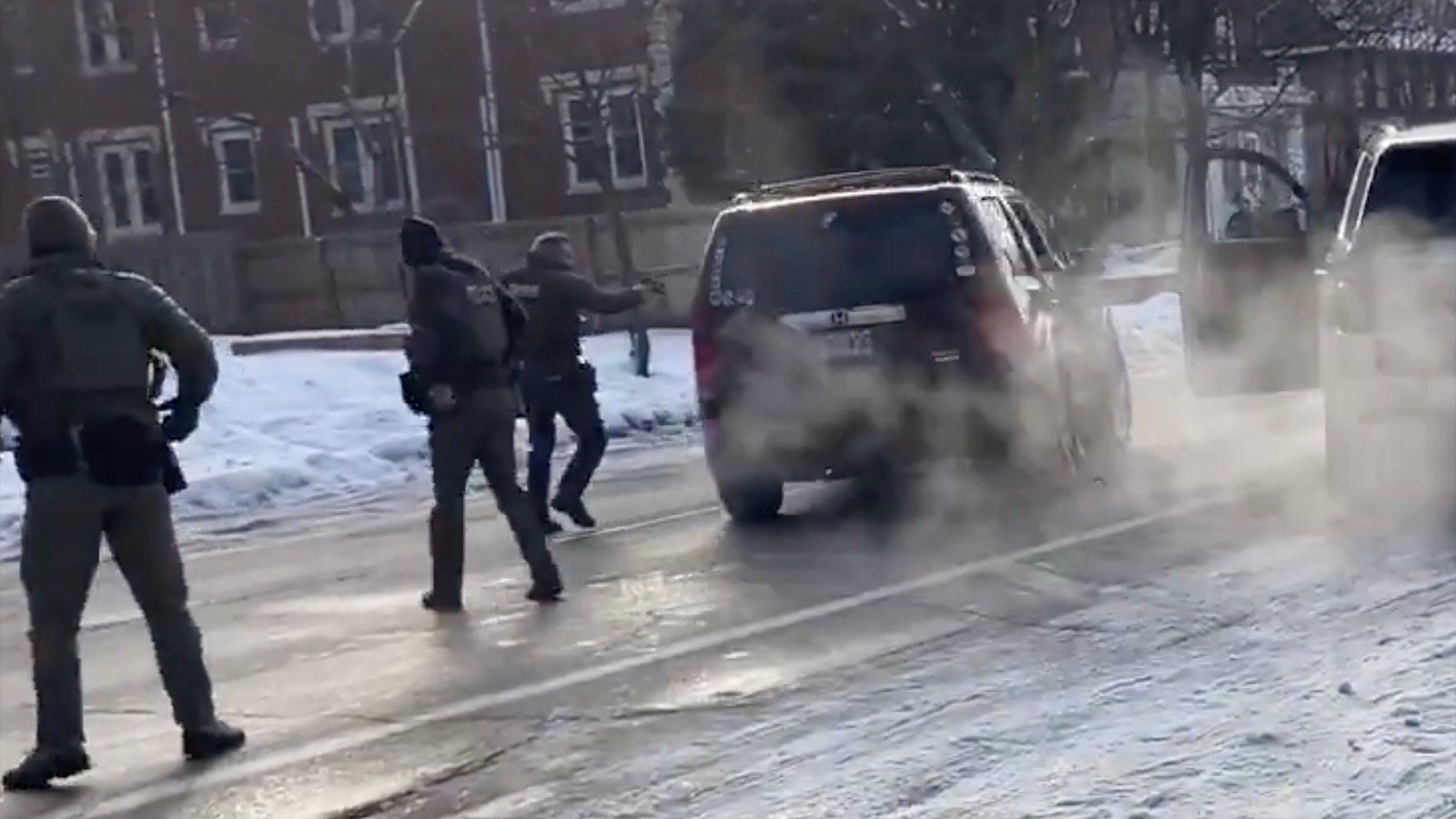
Minneapolis ICE shooting: A minute-by-minute timeline of how Renee Nicole Good died
ABC News' frame-by-frame review of video from Wednesday's ICE shooting in Minneapolis examines what happened before, during, and after the incident.
 abcnews.go.com
Tapahtumien aikajana:
9:36:51 a.m.
22 seconds before the shooting
A woman who would later identify herself as Good's partner stands behind the Honda Pilot and appears to question a federal agent, according to video obtained by local attorney Daniel Suitor that was shared with ABC News. The woman and the agent appear to be holding up cellphones filming each other.
The Honda Pilot can be seen moving very slightly forward while the woman and agent are behind the car. The vehicle then stops.
This agent would subsequently move alongside the Honda Pilot's passenger side and position himself in the front of the car.
9:36:58 a.m.
15 seconds before the shooting
A Ford Explorer with California license plates that had been on the side of Portland Avenue can be seen on video pulling out onto the street. A different video shows Good's driver-side front window is open, and she appears to gesture for the Ford Explorer to pass in front of her Honda Pilot, which it does.
Good continues to wave her hand from left to right after the Ford passes as two other officers are seen pulling up in an unmarked Nissan Titan pickup truck with flashing red and blue lights. They stop in the middle of the street.
9:37:08 a.m.
5 seconds before the shooting
The two officers in the Nissan Titan are seen on video exiting their vehicle. They approach the Honda Pilot, ordering Good to "get out of the car." While they are approaching, the Honda Pilot is put in reverse. The officer who emerged from the driver's side of the Nissan Titan puts his left hand on the bottom of the Honda Pilot's driver-side front window and his right hand on the door handle, appearing to try to open the door. His hands remain in that position while the Honda Pilot backs up a few feet, with the front wheels of the car pointed to the left as the car backs up.
The federal agent who was walking behind the Honda Pilot then moves alongside the right of the car so he is standing to the front-left of the vehicle.
As the Honda Pilot then begins to move forward, the wheels begin to turn to the right, away from where the ICE agent is standing.
In new video taken by the agent who shot Good and obtained by ABC News on Jan. 9, Good can be seen turning her vehicle’s steering wheel to the right, away from the agent, just over one second before the first shot is fired.
9:37:13 a.m.
Gunfire erupts
The federal agent standing to the front-left of the vehicle pulls out his gun.
The moment of the shooting is captured in at least four videos verified by ABC News. Three eyewitness videos emerged on the day of the shooting. A fourth, taken by the officer who shot Good, was obtained by ABC News on Jan. 9.
With his right hand on his drawn firearm, the federal agent's left hand is still on his phone, with both pointed at the Honda Pilot. He fires the first shot through the front windshield toward Good at 9:37:13 a.m., according to ABC News' metadata analysis.
About fourth-tenths of a second after the first shot, as the car continues to move forward, a second shot is heard.
It is difficult to see exactly what happens as the Honda Pilot passes the agent who opened fire. DHS Secretary Noem told reporters the agent was struck by the vehicle.
The federal agent remains upright and can then be seen on the left of the passing vehicle, facing the driver's side door. The sound of a third gunshot then rings out.
The time between the first shot and second shot is 399 milliseconds, with 299 milliseconds between the second and third shots, ABC News' analysis shows. There are three shots in total that can be heard on camera.
9:37:55 a.m.
Moments after the shooting
Three seconds after the shooting, the Honda Pilot crashes into a parked car on the side of Portland Avenue, video footage shows. It then inches off the side of the one-way street, into the snow near a tree. The woman who later identified herself as Good's partner rushes to the Honda Pilot. The federal agent who shot Good is also seen walking toward the car.
The agent is then seen on video walking back after looking at the driver's side of the vehicle, as a bystander is heard yelling "shame." The agent can be heard saying "call 911." The woman later identified as Good's partner can subsequently be seen kneeling into the Honda Pilot. It's not clear from the video what Good's condition is at that moment.
Varmaan yksi olennainen tekijä tässä kokonaisuudessa on Kristi Noemin ja muiden korkeiden johtajien valehtelu tapahtumista ja uhrin mustamaalaus terroristiksi jo ennen mitään tutkintaa jne. Jos kantaisivat vastuun agenttien koulutuksesta ja erityisesti näistä ylilyönneistä, niin kansan olisi helpompi ymmärtää toimintaa. Nyt meno on kuin gestapolla 40-luvulla.Osa poliiseista ja agenteista syyllistyy liiallisiin voimakeinoihin ei tarkoita sitä, että kaikki niihin syyllistyy.
Lisää koulutusta ja tiukempi seuranta ylilyönteihin korjaisi tilannetta parempaan suuntaan.
ICE-agenttien koulutuksesta oli puhetta jo aiemmin. Vaatimukset ovat löyhät, eikä koulus kestä kuin muutaman kuukauden.
Timen haastattelussa joku ex-ICE-agentti on sitä mieltä, että perseelleen meni ja että voiman käyttö oli liioiteltua. Ihmettelee myös, että miten tämä agentti oli edes paikalla, ottaen huomioon hänen traumat aiemmasta tapahtumasta.

ICE Agents Speak About the Shooting in Minneapolis
Current and former ICE agents have expressed concerns about what happened in Minneapolis, and a broader push to recruit more agents.
 time.com
But behind the scenes, current and former ICE agents have expressed concerns about the agent’s conduct, about the agency’s operations in Minneapolis, and about a broader push by the Trump administration to aggressively recruit more agents.
---
“I’m embarrassed,” one former ICE agent with more than 25 years of experience told TIME. “The majority of my colleagues feel the same way. It’s an insult to us, because we did it the right way to see what they’re doing now.”
---
When asked about the deadly shooting that sparked mass protests in Minneapolis and across the country, both the current and the former ICE agent expressed their reservations about Agent Ross opening fire three times.
“If you fear for your life and you're in imminent danger, policy says you could fire at that vehicle if there's no other recourse,” said a current ICE agent with more than 20 years of experience in the agency.
“If someone is able to make the argument that she was trying to hit him, he feared for his life, and all he could do was shoot…then sure, he can justify it that way. But I think when you look at it a little bit more, it's … very problematic for him,” the agent said.
The current and former agents spoke on condition of anonymity because they are not authorized to speak on the record on behalf of the agency.
The DHS told TIME that Good had “weaponized her vehicle, attempting to run over our law enforcement officers in an attempt to kill them—an act of domestic terrorism.”
But videos of the incident contradict that account. They appear to show Ross positioned to the side of Good’s vehicle when he fired three shots that killed her, with her wheels turned away from him.
Both the former agent and the current agent also questioned why Ross was assigned to this operation in the first place, given a previous injury involving a driver at the wheel of a vehicle just a few months before the confrontation with Good.
“That, to me, has red flags all over it,” the former ICE agent said.
Tuossa artikkelissa on lisäksi muutamia kommentteja ICE-agenttien määrän nopeasta lisäämisestä, heidän koulutuksesta ja osaamisesta.
Last Monday, the Trump administration deployed roughly 2,000 agents from ICE to the Twin Cities area amid a growing fraud scandal at day care centers run by Somali residents. Homeland Security Secretary Kristi Noem said on social media that the agents are there to conduct “ a massive investigation on childcare and other rampant fraud.”
The current ICE agent pointed out that while the pretense of the immigration operation in Minneapolis is to investigate welfare fraud, neither border patrol officers nor ICE agents in charge of deportation, also known as Enforcement and Removal Operations (ERO) officers, are trained to investigate financial fraud.
“None of those skills were asked for when they sought out volunteers, or when they pulled people, it was just… we just need people to go out there and flood the area,” the current ICE agent said.
“You would bring in a team of HSI special agents who have done that before, who have investigated that type of fraud,” he added, referring to Homeland Security Investigations, an agency within DHS.
The surge in Minneapolis is part of a broad nationwide push by the Trump Administration to meet President Donald Trump’s aim to carry out the “largest deportation operation in American history.”
To meet that goal, ICE has doubled its manpower from 10,000 to 22,000 in less than a year, thanks to its aggressive hiring campaign. To respond to the massive surge of new officers, ICE has shortened the training at the Federal Law Enforcement Training Center in Georgia from 13 weeks to six weeks, NBC first reported. The former agent called that a “recipe for disaster.”
“You can't train someone to do all the basic law enforcement stuff, let alone the law. Immigration law used to be a five or six-month course at the academy. How do you know that people are here legally unless you know the law? You use Google?” the current ICE agent said.
The former ICE agent also said that this rushed training could lead to a domino effect as more senior ICE agents plan for retirement, and the new recruits, who didn’t have as much legal and enforcement training as previous generations, fill the gap.
Some retired agents have also been invited by ICE to rejoin the force, but according to the former ICE agent, the risk of going back outweighs staying retired.
“The biggest concern is jeopardizing your pension. And then, of course, violating the law. If you're ordered and you know that you're violating the law and you say no, then you stand a chance of being terminated. And then you jeopardize your pension,” the former agent said, adding that some officers are asked to work for 16-hour shifts six to seven days a week. “For most of us, it's not worth it.”
---
Asked about the public’s biggest misconception about ICE, both the current and former agent said that ICE, like all government agencies, is at the mercy of the Administration.
“Where was all this energy when the election was happening? Everyone knew this was what the Administration was going to do,” the agent said, adding that for the most part, the agents conducting deportations and arrests are not breaking the law.
“You're putting people in a position where they have to quit and try to find work in a really bad job market. So they justify themselves, and they say, hey, it's legal, and as long as I'm not violating rights or doing something immoral or illegal, I'm going to do it because this is what the American voters voted for.”

- Liittynyt
- 17.10.2016
- Viestejä
- 3 703
Hyvin on mennyt valheet kaupaksi. Vai että oikein Antifa pitänyt puoli vuosikymmentä valtaa, kuulostaakin kyllä jo niin koomiselta että vaikea uskoa jonkun todella menneen tuohon lankaan. Mitään vuosikausien jatkuvia mielenosoituksia siellä ei ole ollut. Mitäs meinaat että siellä olisi 2021-2024 päivittäin protestoitu ja mikä on näyttö noin järjettömälle väitteelle?Samalla, kun syyttävää sormea osoitetaan poliisien/agenttien suuntaan pitäisi myös miettiä pitäisikö näille mellakoitsijoille tehdä jotain?
Portland erittäin hyvä esimerkki, jossa Antifa on pitänyt valtaa ja sekasortoa kohta jo, mitä 5-6vuotta? Näille "mielenosoituksille" on ollut myös hyväksyntä alueen poliittisilta toimijoilta; "kyllähän kansan pitää saada osoittaa mieltään" ja näin ollen poliisit ovat olleet lähes kädettömiä puuttumaan asiaan.
Sama kuin Suomessa elokapina oli sisäministeri Maria Ohisalon suojeluksessa.
Nyt näiden Trumpin tekemisten takia siellä on toki ollut viime vuodesta alkaen pitempikestoista protestointia Portlandin ICE-rakennuksen lähistöllä, mutta kuten kuka tahansa on voinut livestriimeistä todeta niin aika paljon se on ollut vaan pienten ryhmien seisoskelua kylttien kanssa, välillä sitten isompia joukkoja mutta ei mitenkään niin että olisi todellakaan jotain pitkäkestoista sekasortoa. Striimailijatkin on lähinnä olleet MAGA-porukkaa jotka on halunnut mennä sinne häiriköimään ja tukemaan tätä valheellista kuvaa mutta striimit viime aikoina vähentynyt kun todellisuus paikanpäällä ei oikein ole tukenutkaan omia valheita.
Tämä on juuri sitä äärilaidan esiin nostamista.Et nyt taida ymmärtää todellisuutta sellaisena, kun se on olemassa.
ICE:n tarkoitus ei ole toimia tehokkaasti laittomien siirtolaisten karkoittamisessa, vaan toimia kuin SA-joukot. Mitä se muuten edes tekisi Minnesotassa, jossa on vähemmän laittomia siirtolaisia kuin Texasissa? Tuollainen toiminta, jossa mätetään siviilejä turpaan ja 20 agentin porukalla kidnapataan satunnainen vääränvärinen kävelijä on kaiken lisäksi uskomattoman tehotonta toimintaa.
Heidän tarkoitus on laittaa (pidemämllä aikavälillä) poliittiset vastustajat kuriin, aiheuttaa meteliä ja kaaosta ja mahdollistaa presidentin valtaoikeuksien laajentaminen poikkeustilalla. Tämä on esimakua tulevasta, jos sanot vastaan tai protestoit, niin hakataan tai ammutaan.
Laittomien maassa olevien kerääminen talteen on aina tehotonta, koska niiden olinpaikkaa ei tiedetä, kenestäkään ei voida tietää onko laiton vai ei ja näitä suojellaan omissa asuinalueillaan.
Olisihan se helppoa ja tehokasta, jos nämä saataisiin omatoimisesti ja rauhallisesti tulemaan johonkin virastoon antamaan itsensä ilmi ja sitten tehtäisiin selvitys onko oikeutta olla maassa vai karkotetaanko.
Jos olet ollut +5vuotta maassa laittomasti tekemättä mitään sen eteen, että voisit saada oikeuden jäädä maahan niin sitten on ihan peiliinkatsomisen paikka, jos sinut tullaan väkisin ottamaan kiinni.
edit. hyvin vähän kokonaismäärään nähden on näkynyt videoita joissa täysin syyttömiä hakataan huvikseen. Yleensä näissä on paljon virkavallan vastustamista tai muuta vastaavaa mukana.
Jos et tiedä asiasta yhtään mitään, etkä ole edes yrittänyt ottaa asiata mitään selvää niin turhaan tulet minulta vaatimaan yhtään mitään todisteluita.Hyvin on mennyt valheet kaupaksi. Vai että oikein Antifa pitänyt puoli vuosikymmentä valtaa, kuulostaakin kyllä jo niin koomiselta että vaikea uskoa jonkun todella menneen tuohon lankaan. Mitään vuosikausien jatkuvia mielenosoituksia siellä ei ole ollut. Mitäs meinaat että siellä olisi 2021-2024 päivittäin protestoitu ja mikä on näyttö noin järjettömälle väitteelle?
Nyt näiden Trumpin tekemisten takia siellä on toki ollut viime vuodesta alkaen pitempikestoista protestointia Portlandin ICE-rakennuksen lähistöllä, mutta kuten kuka tahansa on voinut livestriimeistä todeta niin aika paljon se on ollut vaan pienten ryhmien seisoskelua kylttien kanssa, välillä sitten isompia joukkoja mutta ei mitenkään niin että olisi todellakaan jotain pitkäkestoista sekasortoa. Striimailijatkin on lähinnä olleet MAGA-porukkaa jotka on halunnut mennä sinne häiriköimään ja tukemaan tätä valheellista kuvaa mutta striimit viime aikoina vähentynyt kun todellisuus paikanpäällä ei oikein ole tukenutkaan omia valheita.
Ei ne siellä yhtäjaksoisesti ole mellakoineet, mutta 5-6v sitten homma alkoi ja jatkunut siitä saakka, eri muodoissa. Kaitpa ne välillä on taukoakin pitäneet, mutta nyt siellä taas ICE keskuksen edessä on ollut jopa ihan pysyviä leirityksiä Antifan toimesta.
Vanha uutinen vuodelta 2021, jossa kerrotaan mellakoiden jatkuneen vuoden ajan.
Siellä pormestari on mukana kannustamassa mellakoita.
ABC uutinen "After a year of protests, Portland residents have waning patience for antifa"
Lisää videoita näät esim youtubesta hakemalla "antifa portland"
- Liittynyt
- 17.10.2016
- Viestejä
- 3 703
Maalitolpat siirtyikin ennätysajassa. Kiitos kun myönsit valehdelleesi. Ehkä kannattaisi katsoa peiliin sen kanssa että tietääkö asiasta mitään.Ei ne siellä yhtäjaksoisesti ole mellakoineet, mutta 5-6v sitten homma alkoi ja jatkunut siitä saakka, eri muodoissa. Kaitpa ne välillä on taukoakin pitäneet, mutta nyt siellä taas ICE keskuksen edessä on ollut jopa ihan pysyviä leirityksiä Antifan toimesta.

- Liittynyt
- 06.12.2019
- Viestejä
- 1 075
Kaikella ystävyydellä: mitäs jos kokeiltaisiin sellaista, että ei vastata jatkuvasti selvästi trollaavien jankutukseen? Juuri sitä he hakevat, eli tavoitteena on saada mahdollisimman paljon toistoja iskulauseille. Jos heitä ei vastaamalla rohkaistaisi, propaganda ehkä vähenisi ja keskustelu pysyisi paremmin asialinjalla. Järkipuheella ja totuudella ei ole tällaisiin kirjoittajiin kuitenkaan mitään vaikutusta.
Onko tämä sitä vasemmistolaista "parempaa keskustelua" (trademark), ei keskustella henkilöiden kanssa, joiden asia tai mielipide ei miellytä, vaan työnnetään pää takaisin pensaaseen ja uskotellaan itselleen ettei asioita oikeasti tapahdu?Kaikella ystävyydellä: mitäs jos kokeiltaisiin sellaista, että ei vastata jatkuvasti selvästi trollaavien jankutukseen? Juuri sitä he hakevat, eli tavoitteena on saada mahdollisimman paljon toistoja iskulauseille. Jos heitä ei vastaamalla rohkaistaisi, propaganda ehkä vähenisi ja keskustelu pysyisi paremmin asialinjalla. Järkipuheella ja totuudella ei ole tällaisiin kirjoittajiin kuitenkaan mitään vaikutusta.
- Liittynyt
- 03.07.2020
- Viestejä
- 243
Laitoinkin tästä pari ignorelle, keskustelu muuttui heti järkeväksi.Kaikella ystävyydellä: mitäs jos kokeiltaisiin sellaista, että ei vastata jatkuvasti selvästi trollaavien jankutukseen? Juuri sitä he hakevat, eli tavoitteena on saada mahdollisimman paljon toistoja iskulauseille. Jos heitä ei vastaamalla rohkaistaisi, propaganda ehkä vähenisi ja keskustelu pysyisi paremmin asialinjalla. Järkipuheella ja totuudella ei ole tällaisiin kirjoittajiin kuitenkaan mitään vaikutusta.
Jos olette joskus ihmetelleet, miten jotkut *suomalaiset* saattoivat kannattaa *Stalinia*, niin juuri tälleen.
Eyewitness: ICE agents gave conflicting orders before shooting woman
Alla vielä relevantti kohta liittyen noihin ristiriitaisiin ohjeisiin. Boldaus omani.An eyewitness told MPR News that ICE agents gave conflicting orders to a driver in south Minneapolis on Wednesday, with one agent ordering her to drive away from the scene where an ICE vehicle was stuck in a snowbank while another yelled for her to get out of her car as he reached for the door handle.
The scene ended with an agent shooting into the car, killing the woman.
Caitlin Callenson said she was walking down Portland Avenue with her partner when she saw who she assumed were Immigration and Customs Enforcement agents.
“They tried to zoom their car out of the snowbank but were just stuck,” she said.
She said other ICE vehicles showed up, leading neighbors to believe it might be an ICE enforcement action. People showed up, and some began blowing whistles.
“People in our neighborhood have been terrorized by ICE for six weeks. We want our neighbors safe, and so when we see a group of ICE vehicles, people in the community are showing up and saying, ‘This is not OK,’” she said.
Callenson said one person — the woman who was shot a short time later — drove her vehicle perpendicular to the lanes of traffic on Portland Avenue, south of the ICE vehicles. By that point, Callenson said, the vehicle stuck in snow had been freed.
“Some of them were leaving, and they just went around her, but ICE gave her orders to leave, while at the same time, another ICE person said, ‘Get out of the car,’ and he reached for her door handle. And then there was an ICE agent in front of her vehicle. So it was difficult for her to leave, as she'd been ordered to do,” Callenson said.
“She turned her steering wheel toward the right. The person was grabbing her door handle, the ICE officer who was in front of her vehicle shot once from the front and twice from the side, hitting her maybe three feet away at the max. Because she was shot, and she was already trying to leave, her foot was on the accelerator, and she crashed into a telephone pole.”
After the shooting, Callenson said a neighbor identifying himself as a doctor asked if he could render aid to the woman who shot but was told by ICE agents to stand back. She said emergency responders’ vehicles couldn’t get past ICE vehicles, so firefighters and other first responders had to walk to the injured woman.
Callenson said she saw the ICE agent who fired the gunshots walk away to the north and get in an ICE vehicle.
Callenson and others took videos of the shooting that are now circulating widely online.
“You can see, like, what happened in that video was not self-defense,” she said.
Löytyyköhän tästä mitään muuta todisteita kuin vihaisen kansalaisen kertomus?
Alla vielä relevantti kohta liittyen noihin ristiriitaisiin ohjeisiin. Boldaus omani.
An eyewitness told MPR News that ICE agents gave conflicting orders to a driver in south Minneapolis on Wednesday, with one agent ordering her to drive away from the scene where an ICE vehicle was stuck in a snowbank while another yelled for her to get out of her car as he reached for the door handle.
The scene ended with an agent shooting into the car, killing the woman.
Caitlin Callenson said she was walking down Portland Avenue with her partner when she saw who she assumed were Immigration and Customs Enforcement agents.
“They tried to zoom their car out of the snowbank but were just stuck,” she said.
She said other ICE vehicles showed up, leading neighbors to believe it might be an ICE enforcement action. People showed up, and some began blowing whistles.
“People in our neighborhood have been terrorized by ICE for six weeks. We want our neighbors safe, and so when we see a group of ICE vehicles, people in the community are showing up and saying, ‘This is not OK,’” she said.
Callenson said one person — the woman who was shot a short time later — drove her vehicle perpendicular to the lanes of traffic on Portland Avenue, south of the ICE vehicles. By that point, Callenson said, the vehicle stuck in snow had been freed.
“Some of them were leaving, and they just went around her, but ICE gave her orders to leave, while at the same time, another ICE person said, ‘Get out of the car,’ and he reached for her door handle. And then there was an ICE agent in front of her vehicle. So it was difficult for her to leave, as she'd been ordered to do,” Callenson said.
“She turned her steering wheel toward the right. The person was grabbing her door handle, the ICE officer who was in front of her vehicle shot once from the front and twice from the side, hitting her maybe three feet away at the max. Because she was shot, and she was already trying to leave, her foot was on the accelerator, and she crashed into a telephone pole.”
After the shooting, Callenson said a neighbor identifying himself as a doctor asked if he could render aid to the woman who shot but was told by ICE agents to stand back. She said emergency responders’ vehicles couldn’t get past ICE vehicles, so firefighters and other first responders had to walk to the injured woman.
Callenson said she saw the ICE agent who fired the gunshots walk away to the north and get in an ICE vehicle.
Callenson and others took videos of the shooting that are now circulating widely online.
“You can see, like, what happened in that video was not self-defense,” she said.
Kaikkien huhujen sijaan olisi hyvä saada tapahtuneesta aukoton ja koko tarinaketjun mittainen tieto, mitä ihan oikeasti on tapahtunut.
Nyt paljon kauhistellaan viimeisiä 5sekuntia; "viaton nainen lähti ajamaan autolla ja ihan ilman mitään syytä agentti ampui naisen".

- Liittynyt
- 24.08.2025
- Viestejä
- 964
Tuosta linkistäsi:Trump on raiskaaja, tuomarikin on sen vahvistanut. Rikosnimike oli "sexual abuse", mutta tuomari on vahvistanut, että käytännön eroa tapauksessa ei ollut raiskaukseen nähden.
“The finding that Ms. Carroll failed to prove that she was ‘raped’ within the meaning of the New York Penal Law does not mean that she failed to prove that Mr. Trump ‘raped’ her as many people commonly understand the word ‘rape,’ ” Kaplan wrote.
Ja kun juttua lukee pidemmälle niin selviää aikalailla ettei mitään oikeita kiistattomia todisteita ole esitetty vaan kyseessä on kokonaisvaltainen arvio/perstuntuma. Hiukan kuin Suomessakin tiettyjen erikoistuomioistuinten päätökset.Kaplan said New York’s legal definition of “rape” is “far narrower” than the word is understood in “common modern parlance.”
Edit: Tämä tosin varmaan kuuluisi Trump ketjuun.
- Liittynyt
- 04.12.2016
- Viestejä
- 2 027
Eli samalla kun ICE käskytti kahvasta pitäen tulla ulos autosta, joku huusi että mene pois. Tästä on videoita useampiakin, mutta missään niissä ei kuulu erilaisia käskyjä.An eyewitness told MPR News that ICE agents gave conflicting orders to a driver in south Minneapolis on Wednesday, with one agent ordering her to drive away from the scene where an ICE vehicle was stuck in a snowbank while another yelled for her to get out of her car as he reached for the door handle.
“Some of them were leaving, and they just went around her, but ICE gave her orders to leave, while at the same time, another ICE person said, ‘Get out of the car,’ and he reached for her door handle. And then there was an ICE agent in front of her vehicle. So it was difficult for her to leave, as she'd been ordered to do,” Callenson said.
Onko silminnäkijä kuullut väärin, ymmärtänyt väärin, valehteleeko tarkoituksella, vai eikö video pidä paikkaansa? Jokin näistä on totta.
Sen naisen vaimo on kuvannut myös koko setin omalla kännykällään, jos sillä olisi video joka tämän todistaisi, eiköhän se olisi jo julkaistu?
- Liittynyt
- 06.12.2019
- Viestejä
- 1 075
WP:n juttu on maksumuurin takana. Päätettiinkö tämä juttu siis Trumpin hyväksi, kun ei ollut kiistattomia todisteita? Jostain jutustahan hän sai muistaakseni ihan tuomionkin juuri rikoksesta/rikoksista Carrollia vastaan.Ja kun juttua lukee pidemmälle niin selviää aikalailla ettei mitään oikeita kiistattomia todisteita ole esitetty vaan kyseessä on kokonaisvaltainen arvio/perstuntuma. Hiukan kuin Suomessakin tiettyjen erikoistuomioistuinten päätökset.
- Liittynyt
- 16.10.2016
- Viestejä
- 22 502
Nimenomaan tämä minuakin kiinnostaisi. Missään julkaistussa videossa en ole nähnyt ristiriitaisia ohjeita, mutta onhan siinä kaikkea hälyä ja tilanne on muutenkin sekava ja muuttuu nopeasti. Ikävä kyllä monien senaattoreiden tapaan olen samaa mieltä, että nykyisen FBI:n "puolueettomaan tutkintaan" ei ole luottamista ja paikalliset viranomaiset eivät tutkintamateriaaleihin pääse käsiksi koska syyt.Eli samalla kun ICE käskytti kahvasta pitäen tulla ulos autosta, joku huusi että mene pois. Tästä on videoita useampiakin, mutta missään niissä ei kuulu erilaisia käskyjä.
Onko silminnäkijä kuullut väärin, ymmärtänyt väärin, valehteleeko tarkoituksella, vai eikö video pidä paikkaansa? Jokin näistä on totta.
Eikös tämä sama "puolueettomuus" ole aina voimissaan, ihan sama kuka USAssa on pressana. Esim Joe Biden pojan tutkinta? Kuinka läpinäkyvää ja puolueetonta se oli?Nimenomaan tämä minuakin kiinnostaisi. Missään julkaistussa videossa en ole nähnyt ristiriitaisia ohjeita, mutta onhan siinä kaikkea hälyä ja tilanne on muutenkin sekava ja muuttuu nopeasti. Ikävä kyllä monien senaattoreiden tapaan olen samaa mieltä, että nykyisen FBI:n "puolueettomaan tutkintaan" ei ole luottamista ja paikalliset viranomaiset eivät tutkintamateriaaleihin pääse käsiksi koska syyt.
Tässä ICE agentin tapauksessa olisi kyllä Trumpin kannalta järkevintä antaa läpinäkyvä tutkinta asiasta ja myös antaa oikeudenmukainen tuomio, jos tutkinnassa siihen päädytään.
Mulle näkyy koko artikkeli ilman maksumuureja. Tässä artikkelissa on kyseessä Trumpin valitus tuomiosta. Tuomio on siis tullut, valitus tuomion suhteen hylätty tuon mainitun tuomarin toimesta.WP:n juttu on maksumuurin takana. Päätettiinkö tämä juttu siis Trumpin hyväksi, kun ei ollut kiistattomia todisteita? Jostain jutustahan hän sai muistaakseni ihan tuomionkin juuri rikoksesta/rikoksista Carrollia vastaan.
“The finding that Ms. Carroll failed to prove that she was ‘raped’ within the meaning of the New York Penal Law does not mean that she failed to prove that Mr. Trump ‘raped’ her as many people commonly understand the word ‘rape,’ ” Kaplan wrote.
He added: “Indeed, as the evidence at trial recounted below makes clear, the jury found that Mr. Trump in fact did exactly that.”
Kaplan said New York’s legal definition of “rape” is “far narrower” than the word is understood in “common modern parlance.”
The former requires forcible, unconsented-to penetration with one’s penis. But he said that the conduct the jury effectively found Trump liable for — forced digital penetration — meets a more common definition of rape. He cited definitions offered by the American Psychological Association and the Justice Department, which in 2012 expanded its definition of rape to include penetration “with any body part or object.”
...
“The jury’s finding of sexual abuse therefore necessarily implies that it found that Mr. Trump forcibly penetrated her vagina,” Kaplan wrote, calling it the “only remaining conclusion.”
...
“Mr. Trump’s attempt to minimize the sexual abuse finding as perhaps resting on nothing more than groping of Ms. Carroll’s breasts through her clothing is frivolous,” Kaplan wrote.
He added that the jury clearly found that Trump had “ ‘raped’ her in the sense of that term broader than the New York Penal Law definition.”
Tämä olkoon tässä ketjussa minun osalta tuossa. Halusin vaan tarkentaa tuota alun perin lainaamaani kommenttia.

- Liittynyt
- 03.04.2025
- Viestejä
- 249
Asiaton käytös
Vähän epäilen kyllä että kukaan huvikseen hypi liikkuvan auton eteen. Tuossa Renee Goodin keississä agentti varmaan analysoi tilanteen huonosti koska ei olettanut että tuon näköisellä rekkalesbolla olisi pokkaa alkaa yhtäkkiä ajamaan virkamiehen yli ja ehkä oletti hänen tottelevan toisen agentin käskyjä kun näki hänen olevan ikkunassa roikkuvan mutta ei, jätti tottelematta virkamiehen käskyä ja lähti holtittomasti ajamaan vaarantamalla virkamiehen hengen sekä mahdollisesti myös sivullisten jos olisi päässyt tuosta tilanteesta kurvailemaan karkuun.Hypätä yllättäen auton eteen ja ampua heti koska oli ihan pakko.

- Liittynyt
- 19.10.2016
- Viestejä
- 4 747
Vähän epäilen kyllä että kukaan huvikseen hypi liikkuvan auton eteen.
Juu ei huvikseen. Ennenkin tuota tehty tarkoituksella.
tuon näköisellä rekkalesbolla
...
lähti holtittomasti ajamaan
se holtittomuus oli tappamisen seuraus.
- Liittynyt
- 03.04.2025
- Viestejä
- 249
Ja kuinkakohan monta tällaista tapausta on olemassa missä kyttä hyppää huvikseen liikuvan auton eteen oikeuttaakseen ampumisen ? Vähän epäilen että ei kovin monia.Juu ei huvikseen. Ennenkin tuota tehty tarkoituksella.
...
se holtittomuus oli tappamisen seuraus.
- Liittynyt
- 03.07.2020
- Viestejä
- 243
Oikeastaan tällä(kään) ei ole väliä, koska ihmisiä ei saa ampua kuoliaaksi vain siksi, ettei hän tottele pysähtymiskäskyä.Nimenomaan tämä minuakin kiinnostaisi. Missään julkaistussa videossa en ole nähnyt ristiriitaisia ohjeita, mutta onhan siinä kaikkea hälyä ja tilanne on muutenkin sekava ja muuttuu nopeasti. Ikävä kyllä monien senaattoreiden tapaan olen samaa mieltä, että nykyisen FBI:n "puolueettomaan tutkintaan" ei ole luottamista ja paikalliset viranomaiset eivät tutkintamateriaaleihin pääse käsiksi koska syyt.
- Liittynyt
- 03.07.2020
- Viestejä
- 243
Turha tässä on selittää mustaa valkeaksi.Vähän epäilen kyllä että kukaan huvikseen hypi liikkuvan auton eteen.
1. Eihän agentti edes ollut auton edessä, kun hän avasi tulen.
2. Edestä kyllä näkyy että kuljettaja vääntää rattia hartiavoimin oikeaan eli väistääkseen agenttia
3. Agentti ei myöskään saa olla auton edessä, koska liikennepysäytyksessä pysäytettävän pakoonlähteminen (millä tahansa syyllä) on täysin ennalta-arvattava tilanne. Agentit eivät saa itse luoda tilannetta, jossa he ovat "pakotettuja" käyttämään kuolettavaa voimaa.
- Liittynyt
- 03.04.2025
- Viestejä
- 249
Ja kuinkakohan monta tällaista tapausta on olemassa missä kyttä hyppää huvikseen liikuvan auton eteen oikeuttaakseen ampumisen ? Vähän epäilen että ei kovin monia. Tottakai idiootteja löytyy myös poliisista en sitä ole kieltänytkään tuo äskeinen kommentti oli vain niin kaukaa haettu sinulta. Enemmänkin se on huolestuttavampaa jos aletaan rankaisemaan auton edessä olevaa eikä sitä kuka ajaa päälle ja päästämään autoilija vastuustaan koska käänsi rattia pois päin henkilöstä mutta ajoi silti henkilön päälle. Eli siis jos käännät rattia niin pääset pälkähästä ja koska renkaat oli kääntyneenä toiseen suuntaa. "Ei ollut tarkoitus ajaa sinun päältäsi mutta jäit kuitenkin auton alle, sori" Puhumattakaan siitä että tuossa Renee Good tilanteessa oli pako kyseessä.
Viimeksi muokattu:
- Liittynyt
- 03.04.2025
- Viestejä
- 249
Mistä sä tiedät että se tietosesti "loi" sen tilanteen ? Teki ehkä virhearvioinninTurha tässä on selittää mustaa valkeaksi.
1. Eihän agentti edes ollut auton edessä, kun hän avasi tulen.
2. Edestä kyllä näkyy että kuljettaja vääntää rattia hartiavoimin oikeaan eli väistääkseen agenttia
3. Agentti ei myöskään saa olla auton edessä, koska liikennepysäytyksessä pysäytettävän pakoonlähteminen (millä tahansa syyllä) on täysin ennalta-arvattava tilanne. Agentit eivät saa itse luoda tilannetta, jossa he ovat "pakotettuja" käyttämään kuolettavaa voimaa.
Luulisi että tällaisessa ammatissa nuo tilanteet katsotaan tilanne kohtaisesti. Joskus on pakko soveltaa ja joskus tulee virheitä.

- Liittynyt
- 28.10.2025
- Viestejä
- 122
Jep, sääli ettei tuota tilannetta saatu videolle vähintään 4:stä eri kuvakulmasta, niin nyt ei koskaan voida ikinä tietää mitenkä tilanne kehitty tai miksi jäästeve joutu ampumaan naista kolme kertaa päähän ja lopuksi juoksemaan autollensa karkuun. Noillahan on myös ne bodycamit, eiku ne koskikin vain oikeita poliiseja, joilla on virkamerkki ja nimi. Onneksi FBI, kuitenkin tutkii tapahtuneen perinpohjaisesti, kyllä sieltä joku syy vielä keksitään miksi se nainen ansaitsi tulla tapetuksi ja miksei paikallinen poliisi saa asiaa tutkia. On kyllä nyt varmaa ameriikan rikollisille oiva tilaisuus tilata amazonista kympillä icehaalari ja alkaa naamioutuneena ryöstää porukkaa, käytös kun ei päällepäin hirveästi eroa noista palkallisista riuhujista.Vähän epäilen kyllä että kukaan huvikseen hypi liikkuvan auton eteen.
- Liittynyt
- 03.04.2025
- Viestejä
- 249
Kukaan ei ole väittänyt että ansaitsi kuolla. Tilanne oli siitä huolimatta FAFO tilanne. Agentin sekä rekkalesbojen toimita oli täyttä typeryyttä. Ei mitään uutta jenkeissä.Jep, sääli ettei tuota tilannetta saatu videolle vähintään 4:stä eri kuvakulmasta, niin nyt ei koskaan voida ikinä tietää mitenkä tilanne kehitty tai miksi jäästeve joutu ampumaan naista kolme kertaa päähän ja lopuksi juoksemaan autollensa karkuun. Noillahan on myös ne bodycamit, eiku ne koskikin vain oikeita poliiseja, joilla on virkamerkki ja nimi. Onneksi FBI, kuitenkin tutkii tapahtuneen perinpohjaisesti, kyllä sieltä joku syy vielä keksitään miksi se nainen ansaitsi tulla tapetuksi ja miksei paikallinen poliisi saa asiaa tutkia. On kyllä nyt varmaa ameriikan rikollisille oiva tilaisuus tilata amazonista kympillä icehaalari ja alkaa naamioutuneena ryöstää porukkaa, käytös kun ei päällepäin hirveästi eroa noista palkallisista riuhujista.
Muutenkin näiden protestoijien toiminta perustuu tunnetasolla tehtyihin ratkasuihin eikä järjen tasolla.
- Liittynyt
- 18.10.2016
- Viestejä
- 15 351
Näinhän se usein menee. Nyt merkillepantavaa on se, että sama näyttäisi koskevan myös näitä (pol)iisin irvikuvia.Muutenkin näiden protestoijien toiminta perustuu tunnetasolla tehtyihin ratkasuihin eikä järjen tasolla.
- Liittynyt
- 19.10.2016
- Viestejä
- 4 747
Muutenkin näiden protestoijien toiminta perustuu tunnetasolla tehtyihin ratkasuihin eikä järjen tasolla.
Toisin kuin ICE agentin toiminta, kun meinaa jäädää omaa typeryyttään sääntöjen vastaisesti auton alle, ja ampuu sitten sääntöjen vastaisesti kuljettajan, koska haluaa repiä amerikkalaisen ulos. Selvästi ei häirinnyt ICE:n toimintaa, kun pääsi autollaan viiteltynä ohi. Aika vahvasti ICE tuossa aiheutti tilanteen toiminnallaan kuin kutsumasi 'rekkalesbo'. Ilmeisen hankalaa asiallinen kommunikaatio taas.
Protestointi taas kuuluu asiaan, kun tapahtuu protestoitavia asioita. Suorastaan vähän myöhään herätty. Toki kuvittelihan Suomessakin jotkut, että Trump on hyvä valinta presidentiksi, niin ne värikkäät lasit vaan värittää.
Varmaan olisi pitänyt 'sokeasti' seurata sitä ohjetta "älä kävele auton eteen". Vähän kuin 'sokeasti ohjetta seuraten' on hyvä katsoa ympärilleen, ennen suojatielle astumista.
Ehkä niillä pitäisi olla joku oikea poliisi mukana. Tai jotain koulutusta.
Lainaan alle tuon, kun tuossa tuo kuva. Varmaan on väärin jättää käskyjä noudattamatta, mutta ei noilla tilanteessa toisaalta ollut mielestäni oikeuksia alkaa tuota tuolta poistamaankaan, etenkin kun siitä todistetusti ongelmitta pääsivät ohi.
Tulkitsen niin, että yhtään vähemmän uhkaava se täti ei autossaan olisi voinut olla. Väärin hän silti teki, kun ei totellut niiden vasemmalta puolelta lähestyvien agenttien käskyjä, mutta tämän kännyllä kuvanneen ICE-pellen voimankäyttö oli joka tapauksessa täysin överiä ja ohjeistusten vastaista. Ei tuossa videossa mielestäni mitään muuta uutta ollut aiempiin videopätkiin verrattuna.


- Liittynyt
- 11.06.2020
- Viestejä
- 587
Nyt kun jenkit laittoivat ton ruokakolmion viimeisen päälle jiiriin niin ajattelivat että laitetaan samalla lastenkin rokotusohjelmat uusiksi, ihan vaan koska voi.
Jos itse oikein käsitin niin enää ei suositella kaikille lapsille mm näitä: influenssa, rotavirus, rsv, hepatiitti a ja b ja meningokokki.
Why CDC’s Vaccine Rollback Comes at the Worst Possible Time
Doctor Mike avaa tässä hienosti ja ymmärrettävästi asiaa:
Linkki: https://www.instagram.com/p/DTioG7iETHr/
Jos itse oikein käsitin niin enää ei suositella kaikille lapsille mm näitä: influenssa, rotavirus, rsv, hepatiitti a ja b ja meningokokki.
Why CDC’s Vaccine Rollback Comes at the Worst Possible Time
Doctor Mike avaa tässä hienosti ja ymmärrettävästi asiaa:
Linkki: https://www.instagram.com/p/DTioG7iETHr/
Viimeksi muokattu:
- Liittynyt
- 03.04.2025
- Viestejä
- 249
Huomautus - pelkkien linkkien postaaminen ei ole keskustelua, referoi linkityksen sisältö oleellisilta osin muille keskustelijoille
Linkki: https://x.com/MJTruthUltra/status/2011465431479886271
Täydellinen esimerkki FAFO tilanteesta. Kuinkakohan monta mahdollisuutta tuollekkin annettiin tuossa tilanteessa ?

Tuli tämä vanha huumorivideo mieleen:
Linkki: https://www.youtube.com/watch?v=3mjPc_Fcef4
Nykyään tosin jenkki-gangstojen tilalle on ilmestynyt keski-ikäiset "karenit"

Viimeksi muokattu:
Mistä sä tiedät että se tietosesti "loi" sen tilanteen ?
Ihan vain menemällä auton eteen. Agentti ei olisi saanut mennä auton eteen, mutta meni silti. Joten hän ei voi käyttää itse luomaansa tilannetta tekosyynä tappaa ihmisen.
- Liittynyt
- 03.04.2025
- Viestejä
- 249
Ehkä se teki siinä virheen. Joka tapauksessa kun teet tuollaista dynaamista työtä missä voi sattua mitä vaan ympärillä sun pitää pyrkiä arvioimaan riskit ja hyödyt tilanteessa kuin tilanteessa ja se ei ole kiveen kirjoitettua että lopputulos on aina täydellinen.Ihan vain menemällä auton eteen. Agentti ei olisi saanut mennä auton eteen, mutta meni silti. Joten hän ei voi käyttää itse luomaansa tilannetta tekosyynä tappaa ihmisen.
Tämäkin on syy miksi oikeus on monesti poliisin puolella, ne voi vedota niin moniin eri asioihin. Tavallinen kansalainen voi tosin pitää huolen siitä että minimoi omalle kohdalle tulleet ongelmat mitä tulee viranomaisten kanssa toimimiseen. Pompi silmille ja käyttäydy typerästi niin lopputuloskin voi olla epämiellyttävä. Play stupid games, win stupid prizes.
- Liittynyt
- 16.10.2016
- Viestejä
- 22 502
Linkki: https://x.com/MJTruthUltra/status/2011465431479886271
Täydellinen esimerkki FAFO tilanteesta. Kuinkakohan monta mahdollisuutta tuollekkin annettiin tuossa tilanteessa ?
Noita on jenkeissä ihan helvetisti. Siellä on jollakin matalaotsaisella väestönosalla sellainen kuvitelma, että poliisille voi vaan sanoa, että "en ole tehnyt mitään", jolloin poliisi on muka voimaton. Ihan niin se ei tietenkään mene, mutta tyhmä on mitä tyhmä tekee.
Sitten on vielä "sovereign citizen" -porukka lisäksi. Ne ovat niitä, jotka ovat tulostaneet joltakin random facebook-sivulta hirveän nivaskan dokumentteja, joiden perusteella mikään lainsäädäntö ei koske heitä, kun he eivät ole tehneet sopimusta valtion edustaman organisaation kanssa. Videoita huvittavista FAFO-kohtaamisista löytyy tuolla termillä Youtubesta satamäärin ja mm. "Sergeant Curtis" -kanava on keskittynyt erityisesti niihin.
- Liittynyt
- 03.04.2025
- Viestejä
- 249
Täytyypä tsekataNoita on jenkeissä ihan helvetisti. Siellä on jollakin matalaotsaisella väestönosalla sellainen kuvitelma, että poliisille voi vaan sanoa, että "en ole tehnyt mitään", jolloin poliisi on muka voimaton. Ihan niin se ei tietenkään mene, mutta tyhmä on mitä tyhmä tekee.
Sitten on vielä "sovereign citizen" -porukka lisäksi. Ne ovat niitä, jotka ovat tulostaneet joltakin random facebook-sivulta hirveän nivaskan dokumentteja, joiden perusteella mikään lainsäädäntö ei koske heitä, kun he eivät ole tehneet sopimusta valtion edustaman organisaation kanssa. Videoita huvittavista FAFO-kohtaamisista löytyy tuolla termillä Youtubesta satamäärin ja mm. "Sergeant Curtis" -kanava on keskittynyt erityisesti niihin.

Voipi olla myös että siellä on joidenkin poliittisten toimijoiden toimesta rohkaistu ihmisiä ns. kansalaistottelemattomuuteen + väärään itsevarmuuteen. Hyvin hämmentyneitä ne on jokaisessa videossa kun joutuukin ottamaan vastuun. Ihan kuin pikkulapset ketkä saa nuhteita pahoista teoistansa, erittäin tunnetasoisia reaktioita. Olen aika varma että tuolla on protestoijien joukossa paljon (ellei melkein kaikki) emotionaalisesti epäkypsiä ihmisiä ja tekevät sitä myös sen takia että saisivat huomiota. Rikkinäisillä ihmisillä on paljon erikoisia taipumuksia, huomionhakuisuus, uhriutuminen, viha...
Viimeksi muokattu:

DädiFinn
Слава Україно!
- Liittynyt
- 16.10.2016
- Viestejä
- 1 358
Kyllähän se jenkeissä kannattaa ihan oman turvallisuuden ja oikeuksien vuoksi kuvata tilanteet.Nykyään jos näkee jollakin olevan kameran päällä autossa kun poliisi haluaa jotain ei voi kuin olettaa koko homman olevan suunniteltu etukäteen ja sillä tienataan rahaa jotenkin.

- Liittynyt
- 17.10.2016
- Viestejä
- 10 696
Trumpin pakkomielle Grönlannista vaan jatkuu.
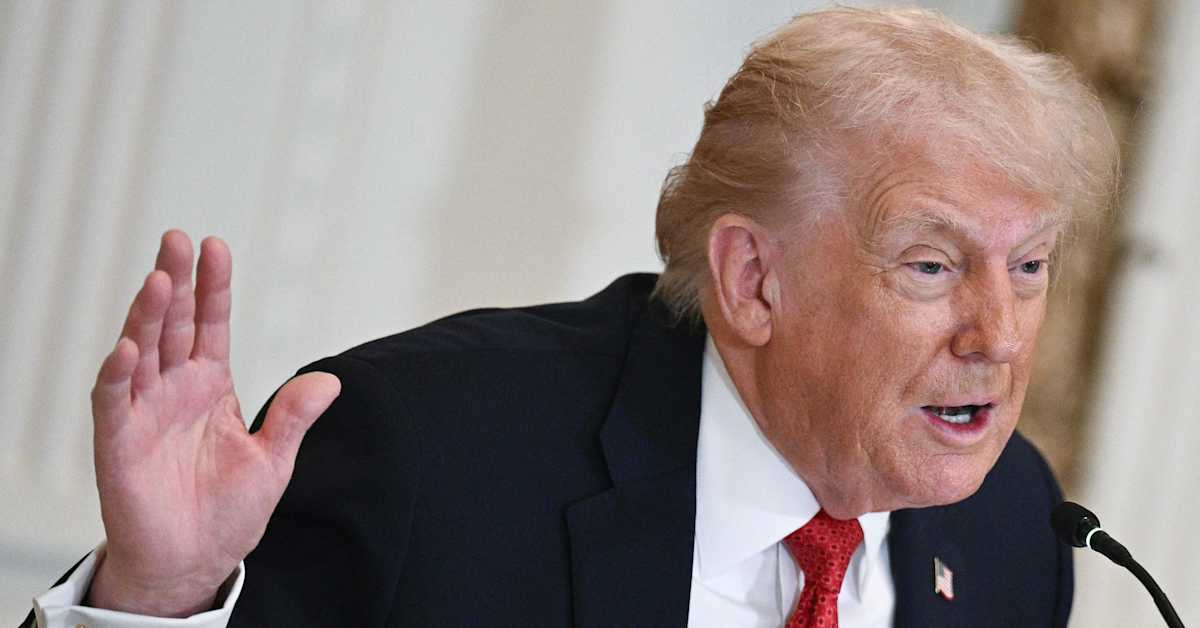
 yle.fi
Senaatoreiden mukaan oranssin mieslapsen jutut on retoriikkaa.
yle.fi
Senaatoreiden mukaan oranssin mieslapsen jutut on retoriikkaa.
Senaattorit kertoivat että odottavansa, että senaatti äänestää lopulta lainsäädännöstä, jolla pyritään estämään Trumpin yritys vallata Grönlanti Tanskalta.
 www.is.fi
Trump: Voin määrätä tullit maille, jotka eivät tue Grönlanti-suunnitelmiani
Tanskalle kuuluva Grönlannin itsehallintoalue kuuluu Natoon.
yle.fi
Senaattorit kertoivat että odottavansa, että senaatti äänestää lopulta lainsäädännöstä, jolla pyritään estämään Trumpin yritys vallata Grönlanti Tanskalta.
Yhdysvaltalaissenaattorilta selkeä viesti Grönlannista
Tanskassa perjantaina ja lauantaina vierailevassa ryhmässä on mukana sekä demokraattien että republikaanien edustajia.
www.is.fi
Oliko tuosta Goodin ampumisesta muuten vahvistettu jo sekin seikka, että agentti olisi ampunut vain 1. laukauksen tuulilasin läpi ja 2 seuraavaa laukausta sivuikkunasta? Jos tämä pitää paikkansa, niin tuohan on ihan selkeä tapaus, ettei noille kahdelle sivuikkunasta ammutulle laukaukselle ollut mitään perusteita, koska auto oli siinä vaiheessa jo ohi agentista, eikä näin ollen aiheuttanut enää minkäänlaista uhkaa.
Uutiset
-
Live: io-techin Tekniikkapodcast (13/2026)
27.3.2026 13:07
-
Honorin tulevat 600- ja 600 Pro -mallit esiintyvät renderöintivuodoissa
27.3.2026 12:31
-
Intel julkaisi pitkään odotetun ”ison Battlemagen”: Arc Pro B65 ja B70
27.3.2026 03:50
-
AMD julkaisi monien toivoman Ryzen 9 9950X3D2 -prosessorin kaksinkertaisella 3D V-Cache -välimuistilla
26.3.2026 23:55
-
Arm AGI on yhtiön ensimmäinen oma prosessori palvelinmarkkinoille
26.3.2026 06:01


